
Jet engines: Turbo Fan, Turbo Jet
Jet engines are among the most critical propulsion technologies in modern aerospace engineering and form the primary power generation systems for aircraft platforms requiring high speed, high altitude capability, and long-range performance. In particular, turbo fan engines and turbo jet engines represent the two principal gas turbine propulsion architectures used across civil aviation, military aviation, research aircraft, and specialized mission platforms.
D.A.D.E Engineering contributes to the development of modern propulsion solutions by providing aerodynamic analysis, thermodynamic modeling, system integration, performance optimization, and advanced engineering consultancy services in jet propulsion systems.
Fundamental Working Principle of Jet Engines
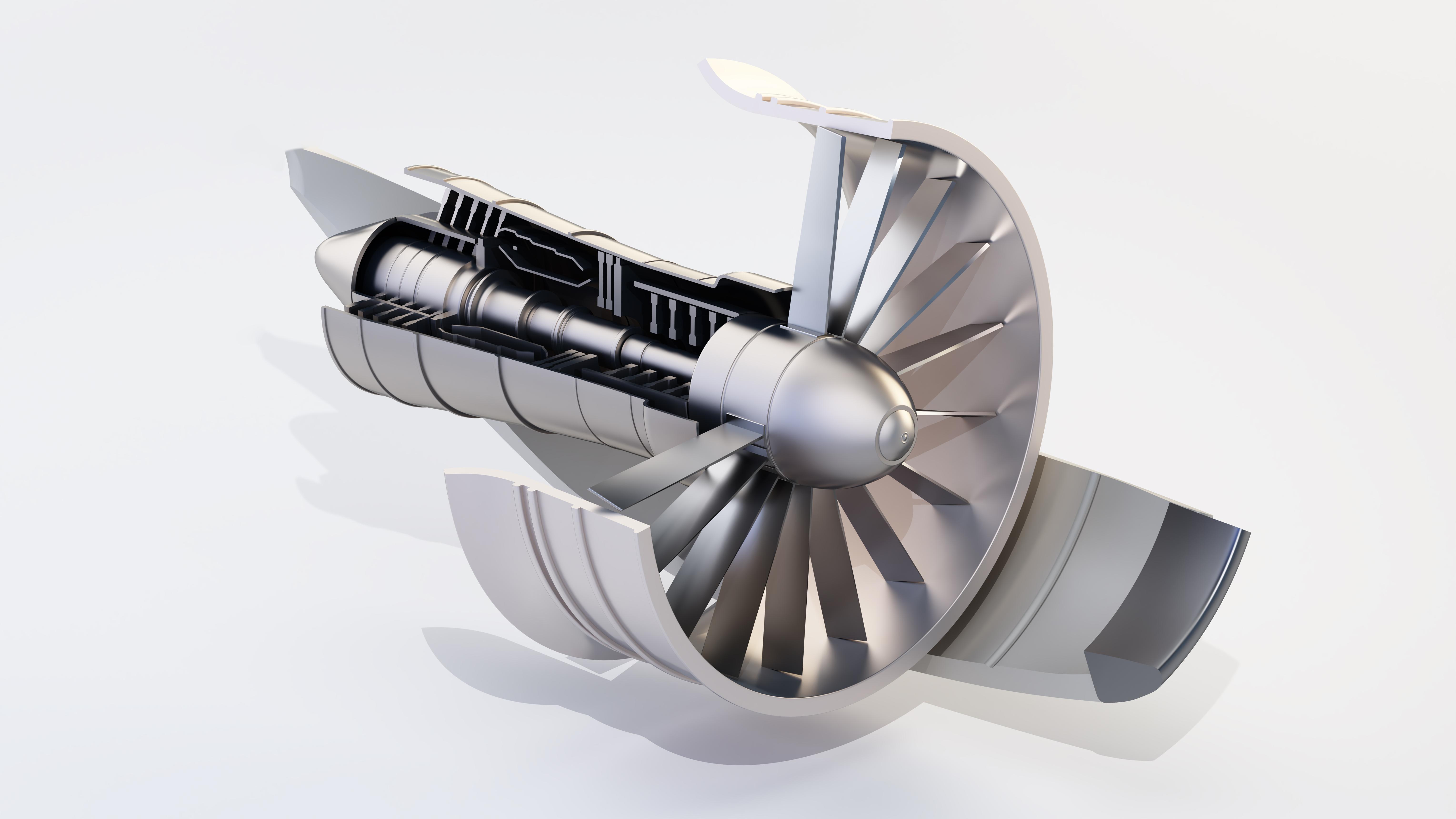
Jet engines operate according to the Brayton thermodynamic cycle and are based on gas turbine propulsion architecture. Atmospheric air entering the engine is compressed through multi-stage compressors, mixed with fuel inside the combustion chamber, and converted into high-temperature energy. The resulting high-energy gas flow drives turbine stages and exits through the exhaust nozzle at high velocity to generate thrust.
The main components of a jet engine include:
air intake system
low-pressure and high-pressure compressors
combustion chamber
high-pressure and low-pressure turbines
exhaust nozzle
accessory drive systems
The coordinated operation of these components defines the propulsion efficiency and operational capability of the engine.
Turbo Fan Engine Technology
Turbo fan engines are the most widely used jet propulsion systems in modern commercial aviation. Due to their high bypass ratio, a significant portion of thrust is generated by airflow accelerated around the engine core. This increases fuel efficiency while reducing acoustic emissions and operational costs.
Key advantages of turbo fan engines include:
high fuel efficiency
low specific fuel consumption
reduced acoustic signature
long-range flight capability
high payload performance
compatibility with wide-body aircraft platforms
As bypass ratio increases, propulsion efficiency improves and environmental impact decreases. Therefore, high-bypass turbofan architectures are widely preferred in next-generation civil aviation platforms.
D.A.D.E Engineering performs the following engineering analyses for turbofan propulsion systems:
fan aerodynamics optimization
bypass ratio performance analysis
nacelle integration design
flow separation modeling
thermal efficiency evaluation
aircraft-engine interaction simulation
Turbo Jet Engine Technology
Turbo jet engines represent the classical low-bypass propulsion architecture designed to produce maximum specific thrust for high-speed mission requirements. These engines are particularly suitable for supersonic flight environments and are widely used in military aviation platforms.
Primary advantages of turbo jet engines include:
high specific thrust capability
reduced frontal cross-sectional area
compact engine geometry
stable high-altitude performance
compatibility with supersonic flight regimes
rapid acceleration response
Turbo jet propulsion systems are commonly deployed in interceptor aircraft, fighter aircraft, experimental flight vehicles, and high-speed aerospace research platforms.
D.A.D.E Engineering conducts the following engineering analyses for turbo jet propulsion systems:
high-speed airflow modeling
supersonic intake design
combustion stability simulations
turbine temperature distribution analysis
nozzle expansion ratio optimization
Performance Parameters in Jet Engines
The performance of jet engines is evaluated using several aero-thermodynamic parameters that determine their suitability for mission-specific operational environments.
Primary performance indicators include:
specific fuel consumption (SFC)
thrust-to-weight ratio
compressor pressure ratio
turbine inlet temperature
bypass ratio
exhaust gas velocity distribution
thermal efficiency
propulsion efficiency
Optimization of these parameters directly improves aircraft operational performance.
Aerodynamic Analysis and CFD Simulations
Computational fluid dynamics plays a critical role in the design and optimization of jet propulsion systems. Compressor blade geometry, turbine flow behavior, and combustion chamber temperature distributions are analyzed using advanced simulation tools.
Engineering studies in this scope include:
three-dimensional airflow simulations
turbine efficiency modeling
boundary layer behavior analysis
supersonic flow simulations
temperature distribution optimization
nozzle exit velocity profiling
Integration of Jet Engines into Aerospace Platforms
Integration of propulsion systems into aircraft structures involves more than mechanical installation. Successful propulsion integration requires coordination between aerodynamic compatibility, vibration characteristics, control systems, and fuel delivery systems.
Engineering integration activities include:
engine placement optimization
center-of-gravity calculations
vibration analysis
intake geometry design
control system integration
fuel system compatibility analysis
Applications in Civil and Military Aviation
Turbo fan engines are commonly used in:
passenger aircraft
cargo aircraft
regional jet platforms
long-range aviation systems
Turbo jet engines are typically used in:
fighter aircraft
interceptor aircraft
supersonic research vehicles
defense aviation platforms
Next-Generation Jet Engine Technologies
Future propulsion systems are being developed to achieve lower emissions, higher efficiency, and reduced structural weight.
Emerging propulsion technologies include:
adaptive cycle engines
hybrid electric propulsion systems
ceramic matrix composite turbine materials
high-temperature superalloys
low-emission combustion technologies
D.A.D.E Engineering provides advanced engineering solutions supporting analysis, modeling, and integration of next-generation propulsion systems.